Since piloting the MIV-REU program in summer 2020, dozens of undergraduate students have been given the opportunity to conduct authentic, meaningful research projects in a flexible and supportive virtual research environment. Here we’d like to share with you some of our program outcomes, statistics and feedback from student participants.


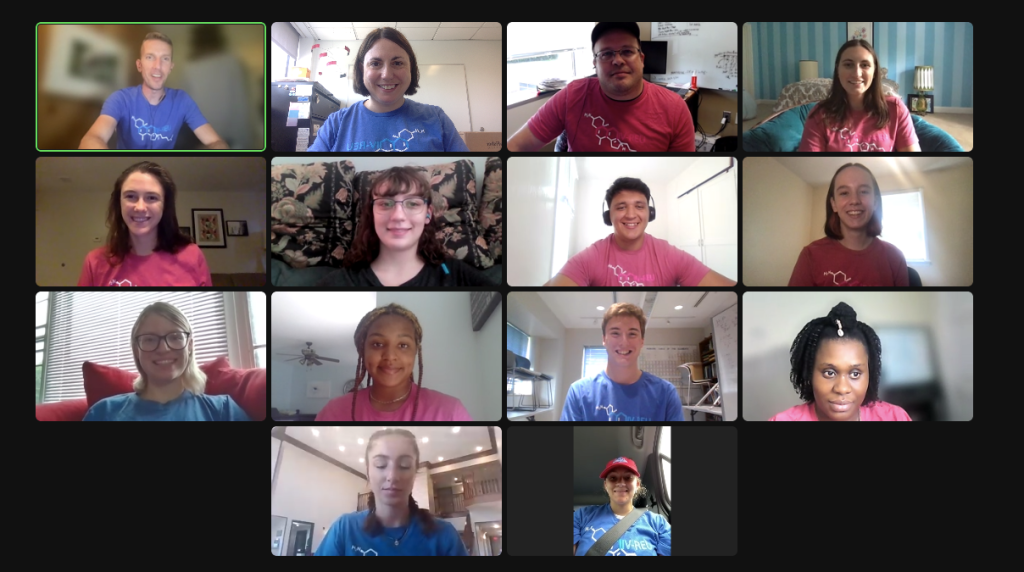

A primary objective of the MIV-REU program is to provide research experiences to students who wouldn’t otherwise have access to traditional on-site opportunities. The data below, from the 2021 program year, shows that most of our student participants face barriers to participation in on-site REU programs. The most common barriers faced by students include travel, financial and personal barriers.


One of the goals of the MIV-REU is to increase students’ feeling of belonging and identity as scientists. We conduct anonymous surveys prior to, and at the conclusion of, the MIV-REU program to get feedback from students. Comparison of pre- and post-program surveys shows that students see a substantial increase in feelings of science identify after participating in the MIV-REU program.
Some facts about MIV-REU 2021:
- Students from 8 states and the District of Columbia, across three different time zones, participated in the summer REU
- 25% of students in the program were first generation college students
- Half of the student participants in 2021 were from racial and ethnic groups under-represented in science (as defined by the NSF)
- While most MIV-REU students are enrolled at 4-year colleges and universities, we had 2 students who joined us from 2-year colleges
- Approximately 25% of our students had just completed their first year of college, approximately 25% had completed two years of college, and the remainder had completed 3 years
- Over 80% of MIV-REU students stated that they are likely or very likely to apply to graduate school

Student Feedback:
- “It was so useful to have a close relationship with other people in my group, so that I could ask questions whenever I needed to.“
- “…they treat me like an actual scientist, which makes me feel like one.”
- “The program was a great experience and it will be fantastic to add to my resume and discuss in grad school interviews.”
- In pre-tests trainees stated that they were most excited about learning technical skills – post-program, the majority expressed that their ‘…biggest and most important learning was soft skills like communicating, problem solving, overcoming challenges, etc.“
- “I enjoyed the collaborative work environment. I felt close to my fellow MIV REU members and I enjoyed the social events“
- “I gained a much greater sense of how to go about the process of applying to grad school from the pd sessions.”
- “{one of my favorite things was} getting to know other young scientists like me in different universities.”
 Molecular Interactions Virtual REU